Guitar buddy guitar classes
Guitar classes offer expert guitar lessons and professional guitar training, with flexible schedules and a supportive learning environment for students of all ages.
expert lessons, flexible schedules, and a supportive learning environment for students of all ages.
Why Choose Guitar Buddy as a Guitar classes?
At Guitar Buddy, we make learning guitar simple, fun, and effective. Our expert instructors, personalized lessons, and friendly environment help students of all skill levels build confidence and improve quickly. Whether you're a complete beginner or looking to sharpen your skills, we're here to guide you every step of the way. Learn Faster •
Play Better •
Enjoy Every Lesson
for all level guitar classes are available
03.
Advanced
Master solos, improvisation, advanced techniques, and live performance skills.
Relaxed Learning
Pursue Your Passion with with Buddy join our guitar classes

For me, the guitar has always been more than just an instrument—it’s a means of expressing feelings, creativity, and personal style. I started Guitar Buddy with a clear idea: to build a space where anyone, no matter their age or skill level, can explore music in a comfortable and welcoming environment. I believe every guitarist begins with a single chord, and with the proper support, time, and dedication, anyone can develop into a skilled and confident musician. My aim is to make learning the guitar an easy, fun, and inclusive experience for all who are passionate about music.
The Guitar: A Timeless Musical instrument
Guitar is one of the most popular and widely played musical instruments in the world. Known for its versatility and beautiful sound, the guitar is used in almost every genre of music, including rock, pop, blues, jazz, classical, and folk. Whether someone wants to play professionally or simply enjoy music as a hobby, the guitar is often the first choice.
One of the main reasons for the guitar’s popularity is its accessibility. Beginners can start learning basic chords within a few days and play simple songs in a short period of time. As skills improve, guitarists can explore advanced techniques such as fingerstyle, lead guitar, improvisation, and songwriting.
Playing the guitar offers many benefits beyond music. It helps improve concentration, memory, and hand coordination. Regular practice develops discipline and patience, as learning an instrument requires consistent effort over time. Many people also find playing the guitar relaxing and enjoyable, making it a great way to reduce stress.
There are different types of guitars available, including acoustic, electric, and classical guitars. Acoustic guitars are popular among beginners because they are easy to carry and do not require additional equipment. Electric guitars are commonly used in rock and metal music and offer a wide range of sounds through amplifiers and effects.
In conclusion, the guitar is more than just a musical instrument. It is a tool for creativity, self-expression, and personal growth. Whether you are a beginner or an experienced musician, the guitar offers endless opportunities to learn, perform, and enjoy the world of music.
From Acoustic to Electric: Types of Guitars Explained
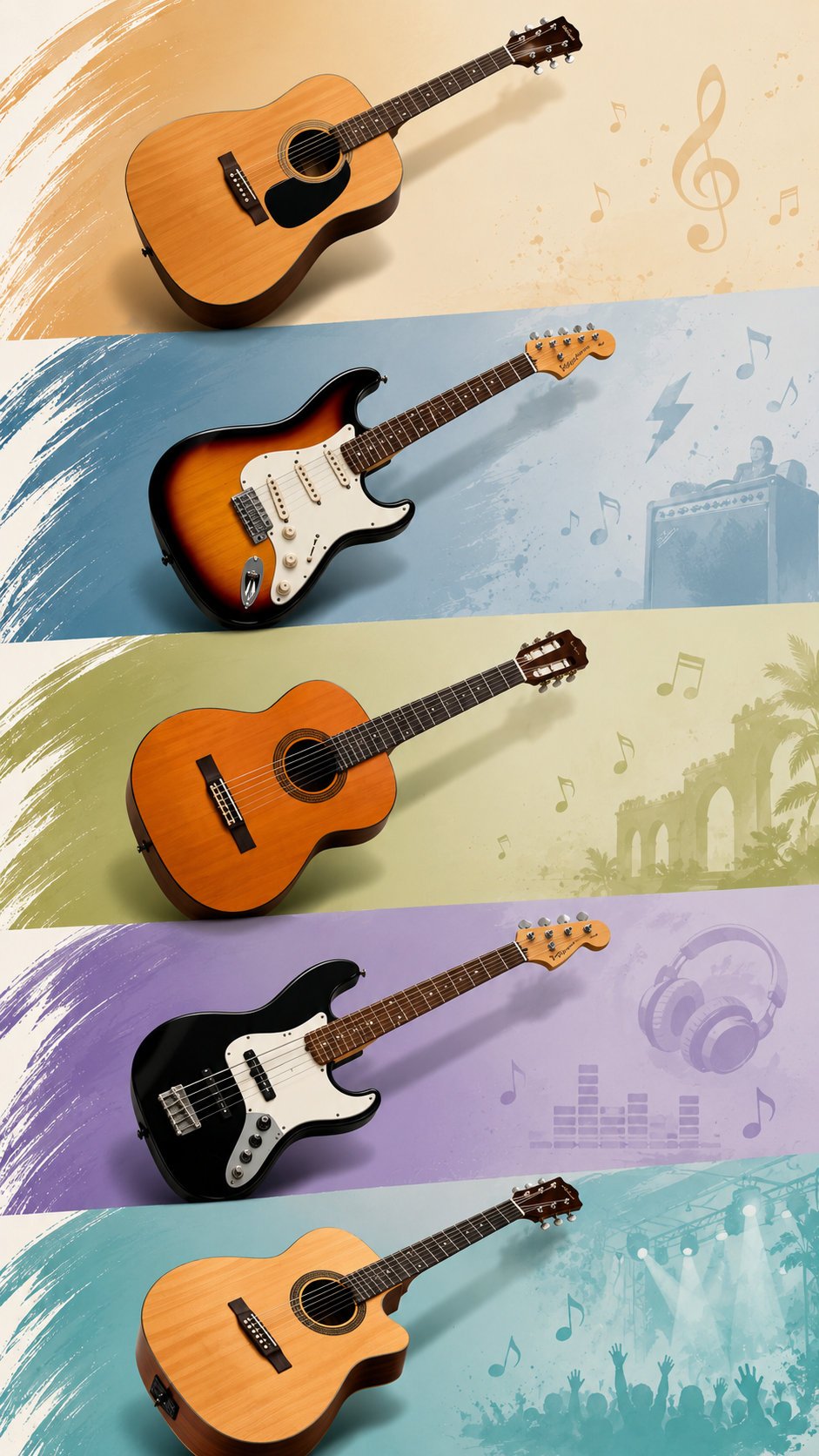
The guitar is one of the most versatile musical instruments in the world. It comes in several types, each designed for different playing styles, sounds, and genres of music. Understanding the different types of guitars can help beginners choose the right instrument for their musical journey.
1. Acoustic Guitar
The acoustic guitar is the most common type of guitar and is often recommended for beginners. It produces sound naturally through its hollow wooden body, without requiring an amplifier. Acoustic guitars are widely used in folk, country, pop, and singer-songwriter music.
2. Electric Guitar
Electric guitars use pickups to convert string vibrations into electrical signals, which are then amplified. They are popular in rock, blues, metal, jazz, and pop music. Electric guitars offer a wide variety of tones and effects, making them highly versatile.
3. Classical Guitar
Classical guitars feature nylon strings instead of steel strings. They produce a softer and warmer sound, making them ideal for classical, flamenco, and fingerstyle music. Their wider neck also helps players develop proper finger placement techniques.
4. Bass Guitar
The bass guitar typically has four strings and plays lower notes than a standard guitar. It provides rhythm and depth to music and is an essential instrument in bands across many genres.
5. Electro-Acoustic Guitar
An electro-acoustic guitar combines the features of an acoustic guitar with built-in electronics. It can be played acoustically or connected to an amplifier for larger performances.
Conclusion
Each type of guitar offers a unique playing experience and sound. Whether you prefer the natural tone of an acoustic guitar, the power of an electric guitar, or the warmth of a classical guitar, there is a guitar suited to every musician’s style and goals.
What Our Students Say about our Guitar classes
I had never touched a guitar before joining Guitar Buddy. The lessons are simple, fun, and easy to follow.
Rahul S.
The teaching style is amazing. I started playing my favorite songs within just a few weeks.
Priya M.
Great environment and supportive instructors. Perfect for beginners and intermediate players.
Aman K.
Ready to pursue
your dream
Expert guitar lessons, flexible schedules, and a supportive learning environment for students of all ages. 🎸